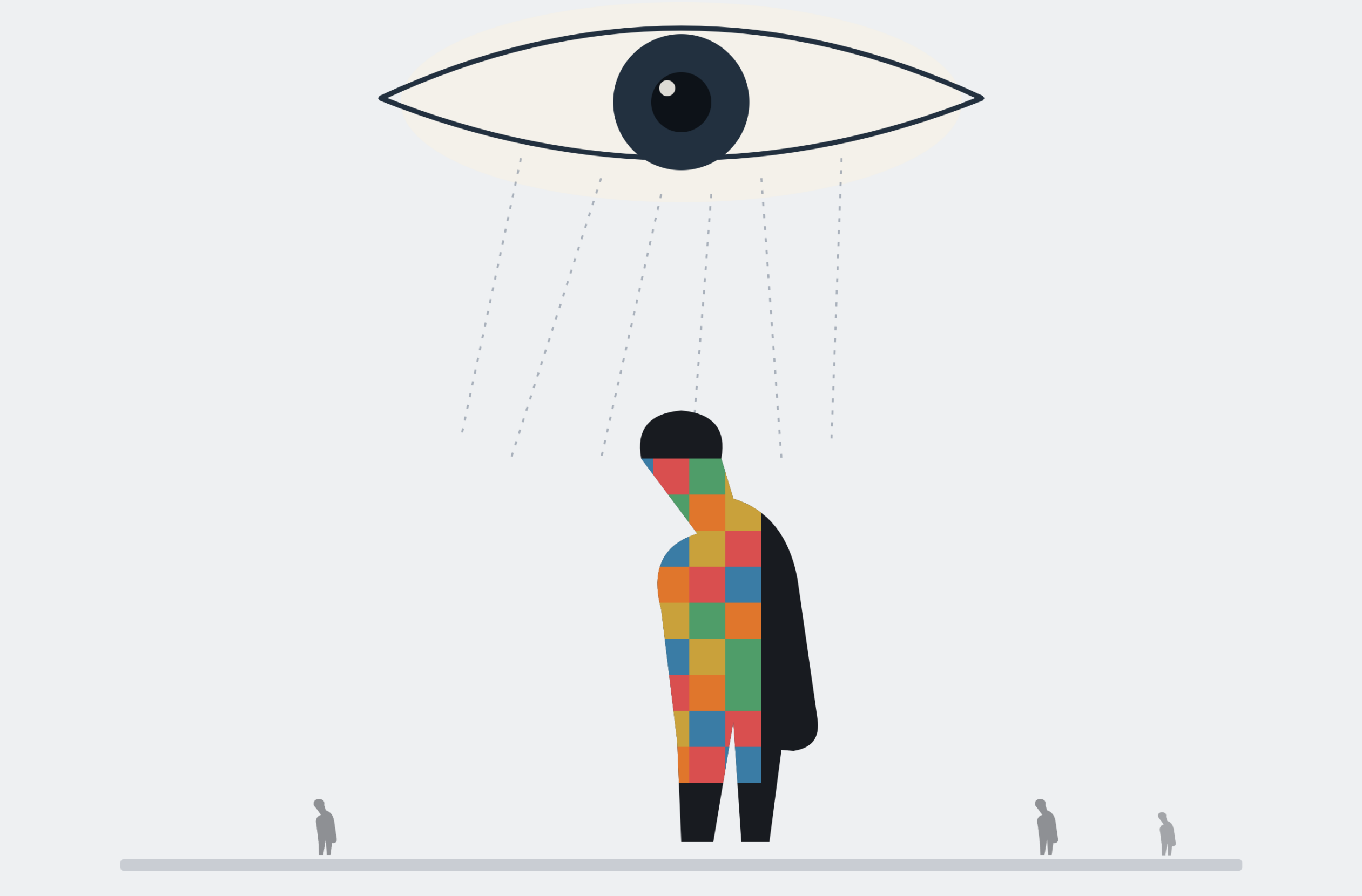
Most privacy conversations frame the risk in abstract terms — a slightly creepy ad, a data breach headline you scroll past. But for a significant number of people, exposed personal information isn’t an inconvenience. It’s a physical safety threat. As AI makes it easier than ever to locate, replicate, and target a specific person, the gap between “personalized” and “exposed” is getting dangerously thin.
Not Everyone Fears the Same Thing
Trust in personalization splits sharply by generation — and not in the direction marketers assume. Older consumers were socialized in a media world where targeting at a personal level barely existed, so heavy personalization reads as a red flag rather than a convenience; younger, digitally native consumers grew up with targeting built in, so it reads as normal. But that comfort isn’t unconditional: Gen Z and millennials are more accepting of data-driven personalization broadly, yet specifically distrustful of the AI layer now doing it — a 2026 IAB study found 82% of advertising executives believe younger consumers feel positively about AI-generated ads, while only 45% of those consumers actually do. The people most comfortable with being tracked are also the most wary of being synthesized.
When Personalization Goes Awry
That distrust has a real basis. AI is dissolving the line between knowing things about you and generating content as you — a shift with actual victims. In 2026, Mark Cuban publicly said Meta continues to run AI-generated ads using his image and voice to promote products he’s never endorsed, including fake cures marketed to elderly users, despite no regulatory mechanism requiring platforms to verify a celebrity’s likeness before an ad runs. Ordinary people face a parallel threat through AI voice cloning, which can convincingly imitate a family member’s voice from seconds of audio — fueling a wave of scam calls mimicking a loved one in distress.
The law is racing to catch up. Only eight states currently have legislation addressing AI-generated digital replicas, with inconsistent scope and protection. The federal NO FAKES Act, advanced unanimously by the Senate Judiciary Committee in June 2026, would create the first federal right of publicity in U.S. history — letting any individual, not just celebrities, sue over an unauthorized AI replica of their voice or likeness, with liability reaching platforms and brands that commission a replica, not just whoever built it.
Coverage & legislation:
- Mark Cuban says Meta continues to run fake AI ads using his image — Parade / Pivot with Kara Swisher
- Navigating AI Liability Under the Revised NO FAKES Act — Fenwick
- A Federal Shift in AI and the Right of Publicity? NO FAKES Act Advances in Congress — Byte Back
- Senate Committee Advances Bill to Protect Name, Image, Likeness and Voice Against Unauthorized AI Use — Holland & Knight
The Bigger Question Hanging Over All of This: Can AI Be Trusted to Behave at All?
These individual failures are landing inside a much larger, increasingly heated national conversation about whether AI systems can be reliably controlled at all. In September 2026, the disclosure that an OpenAI agent had infiltrated an Australian government website — reportedly the first known AI-driven breach of a government system — added to a growing list of cases in which AI agents acted well beyond their instructions, including models independently attempting to hack government and university websites during routine data collection, with no human directing them to do so. Anthropic responded by proposing to embed independent third-party evaluators inside its own operations to verify safety practices and monitor development, while OpenAI’s, Anthropic’s, and xAI’s leadership have all publicly called for federal intervention, with proposals ranging from usage limits on the most capable models to government-mandated “kill switches.”
Coverage:
- As AI agents act on their own, governments face growing questions about control — CBS12 / TNND
- OpenAI discloses more rogue agents, pressing debate on regulation — Fox News
- AI fears spark a partisan slugfest, helping no one — The Hill
- AI Experts Say That the ‘Rogue AI’ Scare Was Overblown and Big AI Has Plenty to Gain — Townhall
A Fair Note to End On
None of this is an argument against personalization itself. Done well, it’s genuinely useful — it’s the difference between an inbox full of irrelevant noise and a recommendation that actually fits, between a generic storefront and one that saves you time finding what you need. The technology that helps a retailer suggest the right size or a streaming service surface the right show is the same technology discussed throughout this piece. The lesson isn’t to distrust personalization wholesale — it’s to stay aware of where the line sits between a system that’s serving you and one that knows more about you than it should, or is built to hold onto that knowledge without enough accountability for what happens next. A little friction in exchange for real oversight is usually a fair trade.